
Delhi has become an important destination for people seeking hair transplant treatment. With several clinics offering different techniques, treatment packages, and surgical approaches, choosing the right clinic can be challenging. Patients often search for the best hair transplant clinic in Delhi, but the answer should not depend solely on advertisements, online ratings, or promotional claims.
A good hair transplant clinic should combine qualified medical professionals, appropriate surgical facilities, careful donor management, transparent treatment planning, and consistent patient care.
Before selecting a clinic, patients should understand the factors that genuinely matter.
1. Medical Expertise and Qualifications
The qualifications of the treating doctor should be among the first things patients investigate.
Hair transplantation is a surgical procedure that requires knowledge of scalp anatomy, hair growth cycles, follicular unit structure, wound healing, and the management of different types of hair loss.
Patients should verify the doctor’s medical qualifications, postgraduate specialisation, relevant hair transplant training, and practical experience.
It is also important to ask who will perform the critical surgical steps. The surgeon’s actual involvement should be clearly explained rather than assumed from the clinic’s advertisements.
2. Experience With Different Hair Loss Patterns
Hair loss does not affect everyone in the same way. Some patients experience mild frontal recession, while others have advanced baldness involving the frontal scalp, mid-scalp, and crown.
A capable clinic should be able to assess different patterns and develop an individual treatment plan.
Relevant experience may include:
-
Male and female pattern hair loss
-
Frontal hairline reconstruction
-
Crown hair restoration
-
Hair transplant repair
-
Beard hair transplantation in selected cases
The clinic should also explain when a hair transplant may not be the most suitable option and whether medical treatment should be considered first.
3. Natural-Looking Hair Transplant Results
One of the main goals of hair restoration is to create a natural appearance.
A successful result depends on several factors, including hairline design, graft distribution, implantation angles, hair direction, and the characteristics of the patient’s existing hair.
The frontal hairline generally requires careful placement of single-hair grafts to create a natural transition. The density behind the hairline should also be planned according to the available donor supply.
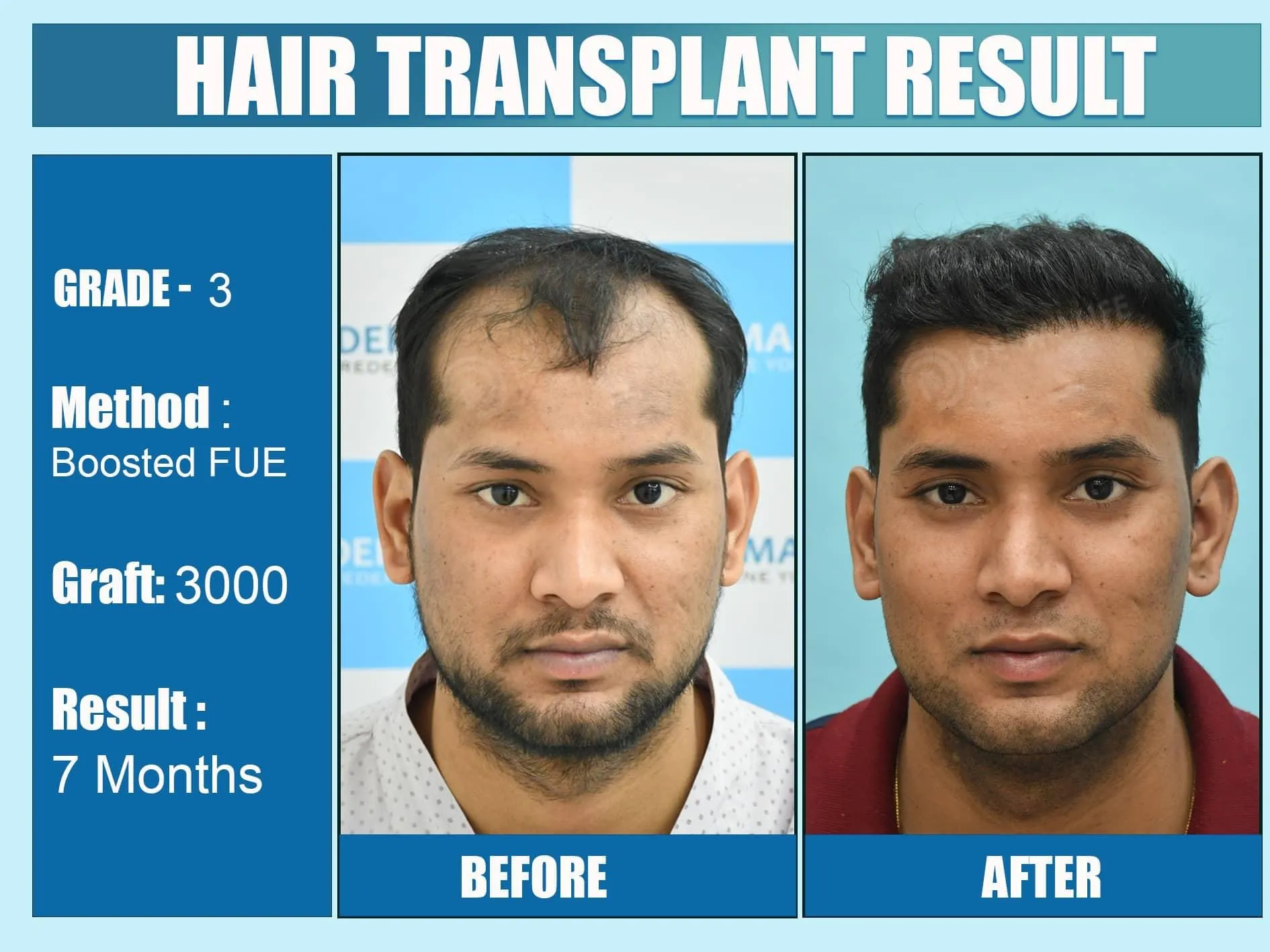
Patients should review before-and-after photographs taken under comparable lighting and angles. They should also check the time elapsed after surgery because hair growth develops gradually over several months.
4. Donor Area Management
The donor area, usually located at the back and sides of the scalp, supplies the follicular units used during a hair transplant.
It is a limited resource. Excessive extraction can lead to visible thinning and may reduce the availability of grafts for future procedures.
A responsible clinic should assess donor density, hair calibre, follicular unit distribution, and the patient’s long-term hair loss pattern before recommending a graft count.
Patients should be cautious of clinics that promise extremely high graft numbers without conducting a proper donor assessment.
5. Understanding the Hair Transplant Technique
Follicular Unit Extraction (FUE) is a widely used technique in which individual follicular units are extracted from the donor area and implanted into the recipient region.
Some clinics also offer specialised approaches to FUE that use different instruments or graft-handling methods.
For example, Dermalife Skin & Hair Clinic in South Delhi offers its Boosted FUE approach, which uses specialised extraction instruments and a technique described by the clinic as the “No Root Touch Method”.
Patients should ask how the recommended method works, what differentiates it from conventional FUE, and whether it is appropriate for their individual condition.
A technique’s name alone should not be considered proof of superior results.
6. Transparent Consultation and Pricing
A genuine clinic should explain the treatment plan before asking a patient to make a financial commitment.
A proper consultation generally includes an assessment of:
-
Hair loss pattern and severity
-
Donor area density
-
Hair thickness and characteristics
-
Estimated graft requirement
-
Expected coverage and limitations
-
Possible future hair loss
-
Recovery and follow-up requirements
Hair transplant costs can vary depending on the number of grafts, surgical complexity, technique, surgeon’s involvement, and clinical facilities.
Patients should request a clear breakdown of the quoted amount and understand which services are included.
7. Surgical Facilities and Post-Operative Care
The quality of a hair transplant also depends on the clinical environment and the team supporting the procedure.
Patients should ask about hygiene standards, sterilisation protocols, trained staff, graft handling, and post-operative instructions.
Follow-up care is particularly important because patients may experience temporary shedding, redness, swelling, and other changes during recovery. They should have access to appropriate medical guidance throughout the hair-growth process.
8. Be Careful With Online Rankings and Promotional Claims
Online reviews and search rankings can help patients discover clinics, but they should not be treated as definitive proof of surgical quality.
A clinic appearing at the top of search results is not automatically the most suitable choice. Similarly, a large number of reviews does not independently establish the quality of every surgical procedure.
Patients should combine online research with verification of medical credentials, genuine patient results, and a detailed consultation.
Dermalife Skin & Hair Clinic, South Delhi
Patients researching hair transplant clinics in Delhi may consider Dermalife Skin & Hair Clinic, located in Green Park Extension, South Delhi.
The clinic is led by Dr. Gaurav Garg, a dermatologist and hair transplant surgeon who completed his postgraduate training at Seth GS Medical College and KEM Hospital, Mumbai. His additional training includes an international fellowship in hair transplant surgery in Israel and advanced dermatology and dermatosurgery training in Singapore.
Dermalife provides FUE and its specialised Boosted FUE approach, along with unshaven hair transplantation, beard hair transplantation in selected patients, and corrective hair restoration.
The clinic also offers free hair transplant consultations, allowing patients to discuss their hair loss, donor area condition, estimated graft requirements, and suitable treatment options.
Final Thoughts
There is no single clinic that is automatically the best choice for every hair transplant patient. The right clinic is one that provides qualified medical supervision, individual treatment planning, responsible donor management, realistic expectations, and appropriate follow-up care.
Patients should take time to compare their options and evaluate the medical expertise behind the procedure rather than choosing solely on the basis of price or advertising claims.
